
Sequence of activities (self-paced):
This exercise is intended to be used as a warm-up, to help students move away from rigidity in their writing. It is a great way to prepare younger students to write collaboratively.
Free-writing is an exercise used to help writer’s block and assist in moving past our rational brains into a free-flowing space for creative writing. Typically, free-writing involves keeping your hand moving, skipping editing and not stopping until the allotted amount of time is achieved. Similar to free-writing, but more accessible to our elementary-aged poets, “Loose, Light Lines” is an activity to help move past perfectionism and constriction into a creative writing space.
Younger writers generally have an easier time at tapping into the creativity and play of poetry, however trying anything new can always be intimidating, and some students will greatly benefit from a warm up exercise.
First, hand out a blank sheet of printer paper to each student. Explain that there’s a technique in drawing where we want to keep our pencil lines “light and loose”. This allows for mistakes to be easily made, erasing to be simple and carefree, with an overall goal of remaining relaxed in your body while drawing, unattached to each line being perfect or right.
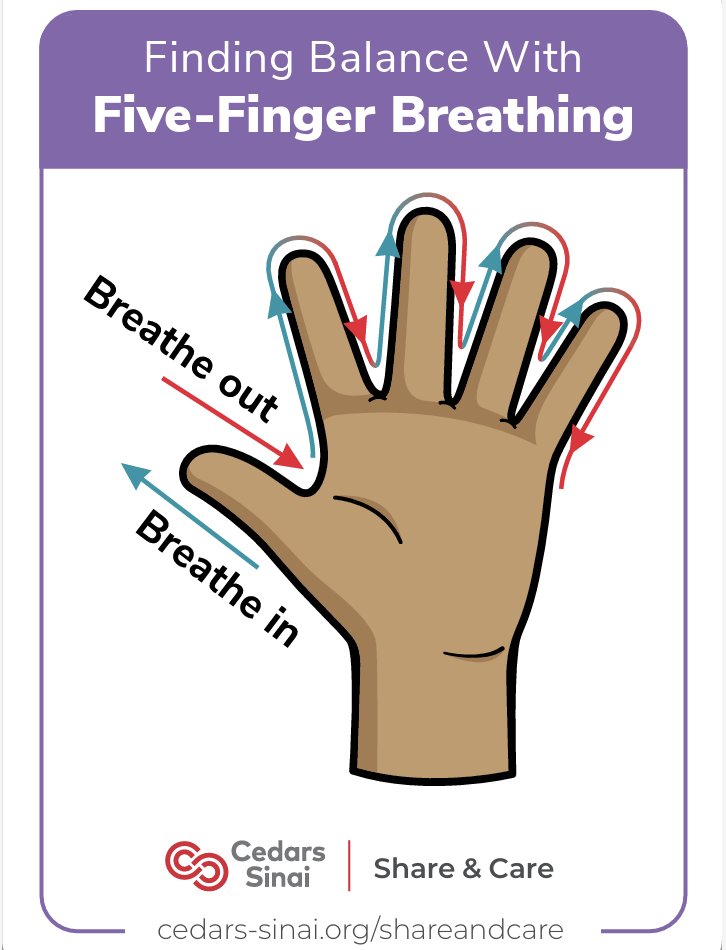 To transition into this next step of practicing our light, loose lines, have everyone take a few deep breaths. Ask the class to shake out their hands: up and down, back and forth. I like to utilize the “Five-Finger-Breathing” technique here (see linked handout). Shake it out one more time, and now we can begin.
Have the students practice drawing different shapes lightly over each other, so they overlap (ie. a circle that is 10 lightly drawn circles more or less in the same space). Then do another shape. And another. Ideally, you will model this first on a document camera if you have access to one. Explain that their hand is holding the pencil normally, the same as you do when writing (near the bottom, with control), and it’s the wrist that is relaxed, making it easy to draw circle after circle, triangle after triangle, on top of each other, in a loose manner.
Next, have the students test how light their lines are: can we erase our shapes without seeing the original line? If not, encourage them to go even lighter. The goal here is to really let go; to release tension and correctness, and create an overlay of shapes that are so light and relaxed, you can erase them and never know they were there.
Explain that being light and loose can have its advantages because we aren’t attached to the outcome. We are simply remaining in the process. Drawing light, loose lines may seem a simple directive, but it takes a lot of trial and error for young students who already associate a lot of pressure and focus into the way pencil meets with paper.
Keep leading the activity by modeling different shapes, overlaying them. If the activity gets too serious, frustrating, or several students are still having a lot of dark lines in their drawings, take a pause with some more wrist shaking and 5 finger breathing.
Repeat this as it feels necessary to warm up and relax and get flowing into creative writing. Explain that next, we will be generating collaborative poetry together where, similarly to the light loose lines, nothing is permanent, all is relaxed, and there are no bad ideas. We are simply creating.
