

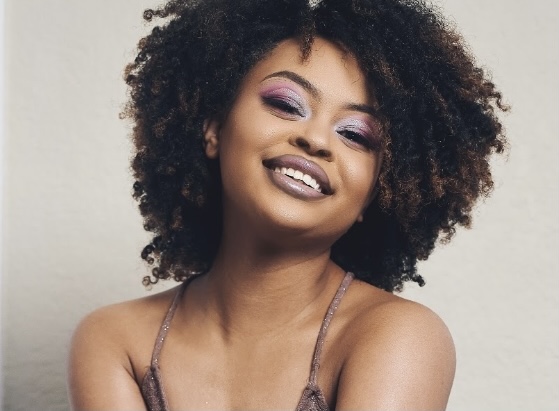
For poet Mikhayla Robinson Smith, the journey into language began not as a choice, but as a response to grief. At just five years old, in the midst of loss she could not yet fully understand, she found herself channeling emotion into words—offering a glimpse into the quiet power poetry would come to hold in her life. What started as an instinctive act of expression evolved into a lifeline. Influenced by the works of Black literary voices and shaped by her academic journey at the University of Georgia, her craft has grown from imitation to intention—transforming into a bold, truth-telling practice rooted in liberation, cultural memory, and the urgent need to bear witness. Here, Smith shares her perspectives with interviewer Lillie Mae.
Can you share a bit about your journey as a poet—what drew you to poetry and how your craft has evolved?
The origins of my poetic journey began when I was five. I had a younger sibling pass away, and I didn’t really understand everyone’s emotions around me, let alone my own. My mom recalls this story more than I remember it, but she said that I wrote a poem in my kindergarten class, somehow channeling and chronicling the grief that I was witnessing. It made my teacher emotional, as well as my mother. That was really my first interaction with poetry and what it could do. I continued to write stories as a child, drawing comics, and reading fervently. I was reading all of the time; you couldn’t get a book away from me. In high school, I really started to struggle with my mental health.
I remember we were doing a poetry unit in Literature class, and we were engaging in readings from students doing Poetry Out Loud. Somehow, I ended up with the poem “Let The Light Enter,” by Frances Elen Watkins Harper, and there was this shift in my mind and in my spirit. Her calling for “more light” became a call for me. I wanted to call in more light in the midst of the death of many things, of depression, of a loss of hope. Her words signaled to me there is more to live for. So, I did more living, and wrote every chance that I could. When I pursued English at The University of Georgia, I felt this buzzing of possibility. I had access to a library full of Black, poetic literature. I experimented with form. I let the words live on the page, and in my breath. I absorbed the knowledge from my professors.
In the beginning, I tried to emulate the forms from the great poets we were learning about. I realized very quickly that calling in more light wasn’t formulaic, but innate. There were things that I wanted to say, subjects I wanted to talk about that didn’t bloom like flowers, or fall gently like rain. My thoughts boomed, echoed, scorched, illuminated, uncovered.
I wanted to tell the truth about what I was witnessing. I wanted to talk about the injustice in my community. I wanted to tell the stories of Black women who had been erased. I wanted to be a griot for the stories untold. My craft erupted into a mission to center poetic liberatory practice, and to bear the truth.
What does your writing process look like? Are there rituals, inspirations, or experiences that guide your poetry?"
Every time I come to the page, or a line of poetry comes to me, it is a ritual. I often view the poem as a muse itself. I let it guide me. I ask, “what do you want me to say?” I let it tell me. I sit with the uncomfortability. The poem tells me to sit, or invites me to sit with it. It may live in my mind for a few months before it comes alive on the page, or in breath. The poem tells me who to call on (study/read). It says “listen to Toni Morrison, hear from Audre Lorde, lean into Gwendolyn Brooks, meditate on Warsan Shire, commune with Aja Monet.” It hovers over me and dances in me as it flutters, waiting to be born. A poem, for me, is space to listen, to come alive, to die a million deaths and be reborn again, to ask and wait for the answer.
Which of your works do you feel most deeply represents your voice, and what themes or messages are central to your poetry?
Recently, I wrote a poem that was featured on WUGA called “We Cannot Eat Poems” and it centers around the questions I have been asking myself. Why write poems in a world on fire? How can poetry liberate us? Why does poetry matter? I pose these questions in the poem, answering with lines like “A poem is something you hunger for.” A poem isn't tangible, but it sees and hears all. It becomes a witness itself. It contains the silence and the noise. It hears the chaos and answers it. It forces us to see the truth in ourselves. It becomes a sacred space to be and it helps us get free. This is the voice and the message that I want to carry in all of my poems. I want people to know that our words have the power to save us, and that we have to hunger for the truth. We have to find and keep our humanity.
As a Black woman poet, how have you navigated visibility and recognition in the literary world? Have there been specific challenges or breakthroughs?
I see visibility as a way for me to connect deeper with folks who are trying to make sense of this world, to build community, and to tell our stories. Yes, there is always the challenge of public opinion/ perspective, but I believe that the way to do this poetry thing is in collaboration and communion with people. I never “got into” poetry for accolades, but I’m a witness to how it can transform. I want other people to feel that way, to be liberated through their words.
Your poetry reflects both personal and cultural narratives—how do you see your work contributing to broader conversations about Black identity, womanhood, or contemporary culture?
I am only here because of a long lineage of Black woman poets illuminating the truth through story. I see my work in canon with theirs, a reflection of their will to put words on pages in a world that aimed to silence them. I’m just continuing the conversation. I am echoing their charge, that our work will never be done until we are all free.
How has building relationships within literary communities or collaborating with other artists shaped your work and career?
Collaboration and community are everything to me. They are both the only ways to keep poetry alive. I think writing itself can be such a solitary act, that we have the possibility to forget the world around us. I’m not interested in producing monologues though; I’m interested in work that showcases our collective expansiveness. That shows we are not a monolith.
Through collaborations and community, I have become a better writer. I have learned more about myself, and about the spaces I am called to witness. It is our job to see one another, to bear each other’s burdens, to allow ourselves the chance to live into our presence, to have full embodiment. Collaboration and community allowed me to explore publishing, to experiment with poetry and sound in my new album The Gospel As Told By Black Love, and brought me into communion with other Black women, like Mokah Johnson, Audrey Patricia Williams, Cara Page, and Joy Priest, and so many more. Having community is the only way to do poetry well.
What guidance would you give to emerging Black women poets who are trying to find their voice, gain visibility, and make an impact in today’s literary landscape?
Stay in the emergence. Always be willing to begin, and to return to the beginning over and over again. Keep your birthright in your core, let it remind you, always… why you are here. Be a student of life. Bear witness always. Listen to the callings, the nudgings, the whispers from your ancestors. Read the ones who came before us. Tell the truth, tell the truth, tell the truth. Above all, love yourself. Be tender with yourself, and your voice. Nurture it, care for it, heal it, give it the space and time it needs. Find the people that help you do this. Find YOUR people. The ones that help you to be vulnerable, to be naked to yourself. Listen to the poem when it calls on you, let it tell you where to go. And, finally, follow the signs, everything you need is already in you.
________________
Mikhayla Robinson-Smith is a poet, essayist, and fiction writer. Her poetry chapbook “Dichotomy” was published in 2020, by Nightingale and Sparrow Press. She studied English at the University of Georgia. She is now an educator based in Athens, Georgia. When she is not writing, reading, or dreaming, you can find her spending time with her husband and their baby girl.
Lillie Mae is a Brand Strategist, media contributor, and visibility expert dedicated to helping women elevate their voice, brand, and influence. She has been featured as a contributor to Sheen Magazine, Rolling Out Magazine, HelloBeautiful.com, BlackLove.com, and more, using storytelling and strategic media to amplify impactful narratives. Through her platform and membership at HerVisibility.com, she creates opportunities for women leaders and creatives to expand their reach through podcast interviews, speaking engagements, and brand exposure. Connect with her on Instagram at Instagram.com/iamLillieMae.