

Centos are poems wholly composed from existing works,
juxtaposing source materials without adding any new language.
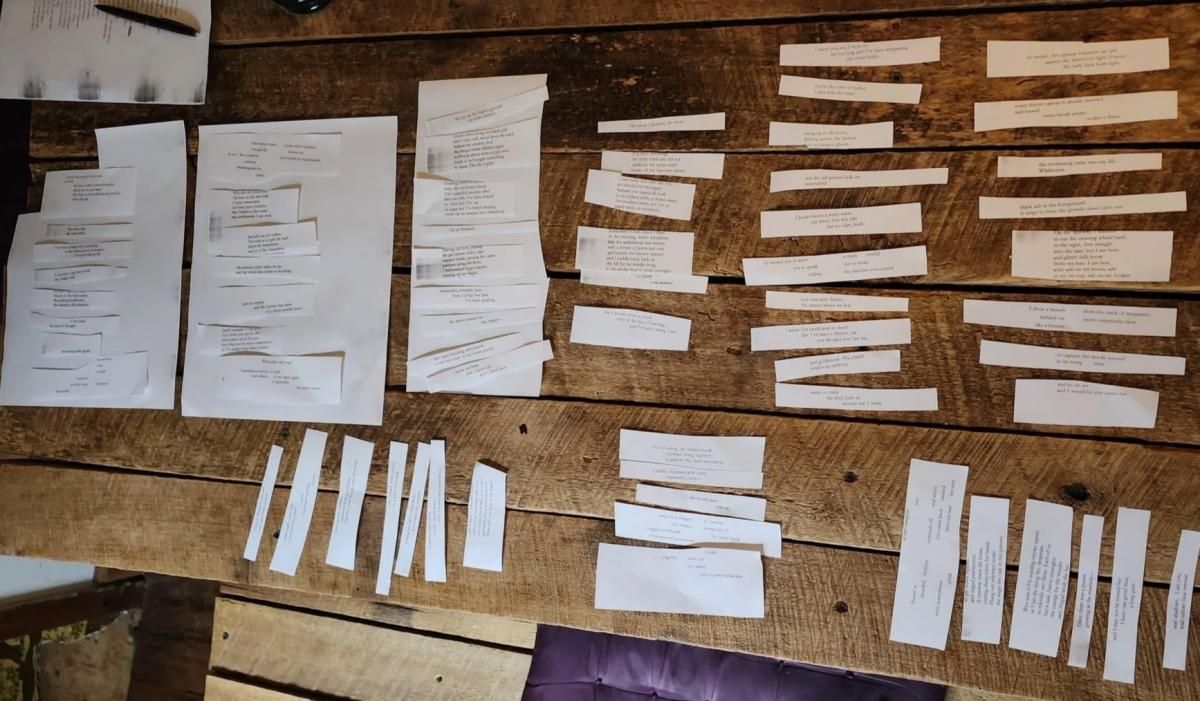
The satsuma is in bloom. It’s the time of year we become one with the oak pollen: I’m pulling strands of it from my hair and my coffee mug. Spring is a season of explosion—things end up where they don’t belong, but this act of collage is an act of creation. Collage requires ceding control, but there are ways to harness unknown, and I’ve developed a prompt for creating a cento below. When unexpected objects come together, everything is made anew.
I am hard at work on a cento, which is almost funny to say because centos are not work at all. Centos are poems wholly composed from existing works, juxtaposing source materials without adding any new language. They’re the result of play and intuition. To make a cento is to release any notions of destinations or goals and to instead trust the unknown as it emerges kinetically. It’s a pollening.
centos encourage us to experiment and blend genres,
blowing past the fences, like pollen.
My cento-in-progress, “Prairie Cento,” takes its lines from many sources: poems on the subject of grasses and flowers, Ashlee Wilson’s beautiful blog about life on the Cajun Prairie—La Prairie Des Femmes—, Kate Chopin’s The Awakening, and more. I chose these sources very intentionally: I’ve been reading about place and prairie; re-imagining the greater landscape of my home state of Louisiana and my place within it. The lines are full of grass and blossom and pollen—rooted in my own experience and yet composed of things that seemingly fell from the sky.
The source materials may share some imagery and/or aesthetics, but they vary widely across place and time. So what happens when they’re pushed up against one another, planted in the same garden? First, the white space between each borrowed line becomes connective tissue—the air in spring. Suddenly they’re breathing together, and from this similarity, patterns and reasoning grow.
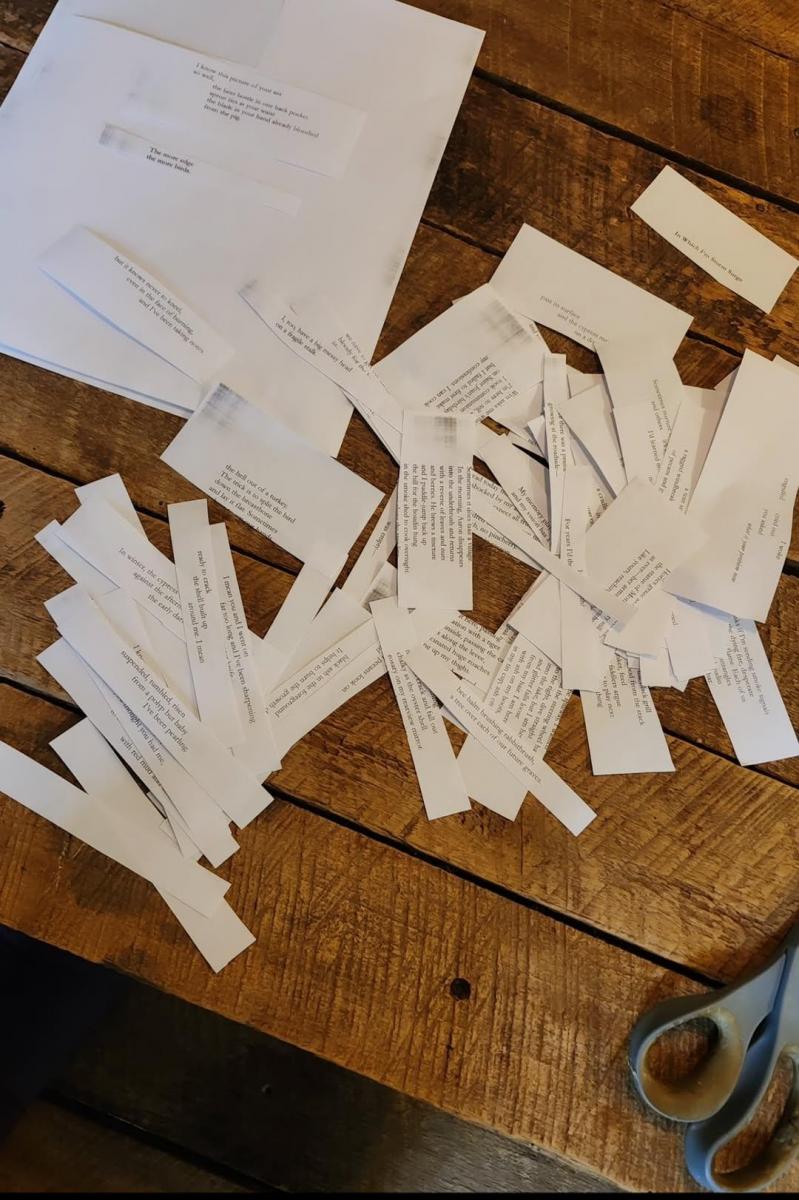
Humans seek patterns. Pareidolia is the tendency to interpret meaning from nebulous stimulus—usually visual—and seeing objects or patterns from mere suggestions, making it a powerful tool for poets. However, it means trusting the reader to see the stories in the clouds. Intuitive logic and juxtaposition can push a reader towards meaning without needing to be explicit. What may seem in creation to be two different lines from two different sources are seen as a complete unit by the reader, who probably doesn’t even know where one ends and another begins. The reader will tend towards meaning: recognizing ideas and patterns in the collage of lines—meaning which may not have been intended by the poet initially.
Starting a cento is like sowing seeds: some will take, some won’t. Sometimes there’s too much light or heat or water. Sometimes it happens organically, and sometimes it takes adjustment to achieve a healthy result. The poet is the gardener: in the act of revision, we must tend to each line and see where it best fits within the garden plot of the cento.
A true cento roots downward and outward,
blooming in unexpected ways,
and growing wilder with each re-read.
Maybe I’m mixing my plant metaphors; maybe I’m pushing it. I’m trying to say that a poet/creator must strike a balance between the intuition of collage and the work of revision: once that seed of suggestion becomes a sort of logic, how can the cento be restructured to support that greater meaning?
A strong cento has an implied pattern/meaning in its choice of source text, its order, and its visual appearance. The poet must consider what connects the source texts: do they share a common image, or form, or location, or even era? Are they “too random,” or is the randomness a part of the intention? The sources we include are part of the form, of the message, and I wanted this prairie cento to be like the real one: pollen everywhere, uncontainable in its rhizomatic breadth. I wanted it to spread across genres, tonal registers, images, and ideas—while still being cohesive. I wanted the reader to feel a sense of growing, both upward and outward, powered by an undeniable yet invisible logic.
Either way, where do the lines begin, and where do they end? Lines must be moved around and tried in numerous ways—a balance of intent and surprise. Trust the reader will follow the paratactic leaps, yes, but also be sure this trust is rewarded. I think a cento is strongest when it “goes somewhere.” I want “Prairie Cento” to offer a sense of wandering the prairie while building the emotional arc of an exit from an abusive relationship.
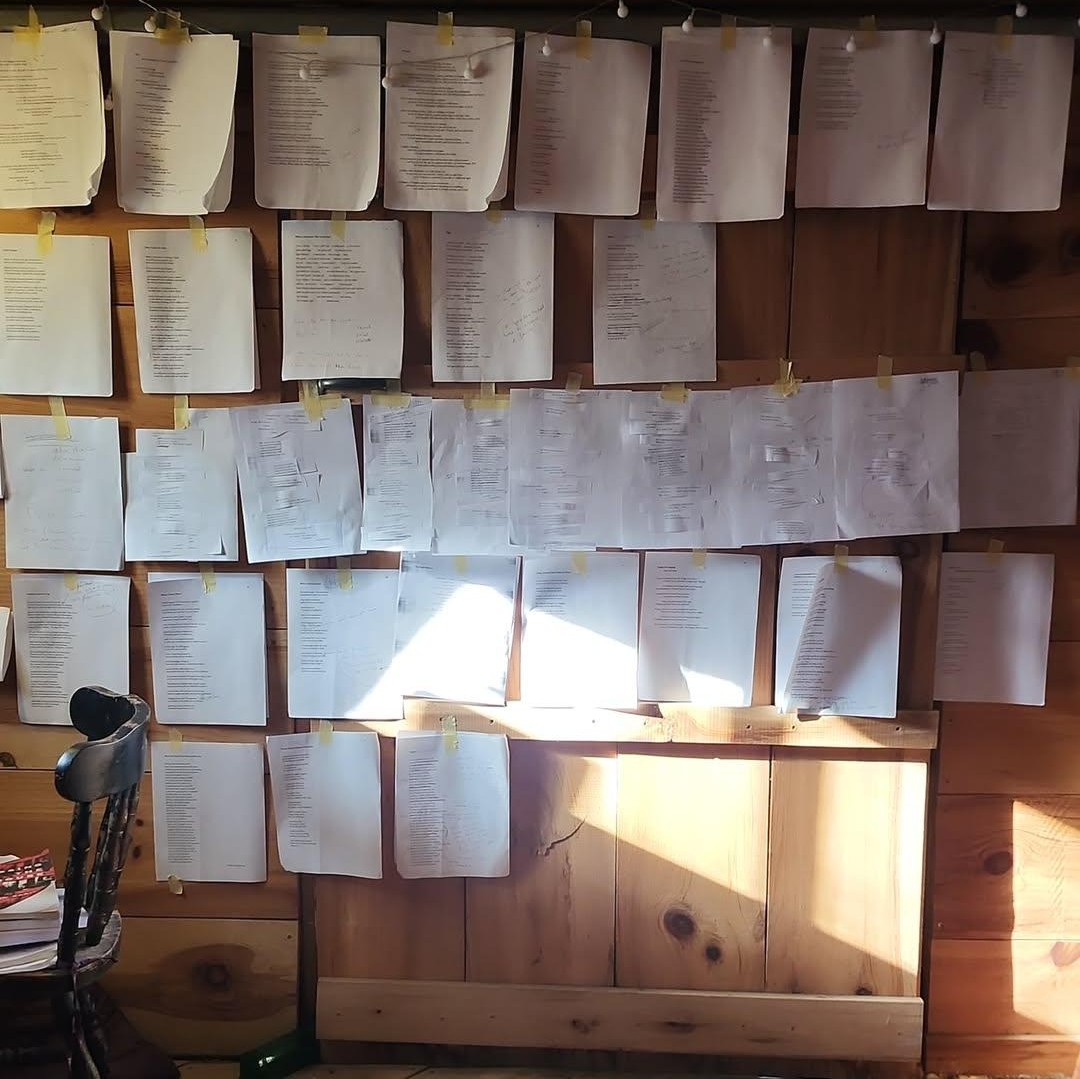
Finally, what does the poem look like on the page? As in any other poem, line lengths, stanza lengths, and white space matter. How can these chosen lines be manipulated? How can enjambment or white space help the breath of the poem, connecting and separating the disparate lines into a single poetic unit? I think of this part as “the pollening.” I fight the urge to keep the spacing of the source material and instead break sentences into lines and use two sources in a single line—pollen covers everything until the whole yard becomes a single yellow unit.
These three elements are like companion plants: together, they are a unit and stronger than they’d be individually. Of course, other poetic forms can steer a collage poem. The centerpiece of my book Sweetbitter is a collaged result of both happy accident and researched intention. I was inspired by Muriel Rukeyser’s “The Book of the Dead”—which I’ve written about before in “Roadmaps to Docupoetics”—to incorporate historical texts related to the poem’s topic. I had several poems written, so I literally printed them out, along with my source texts, cut them up into pieces, and started rearranging them on my kitchen table. Once I had a long piece, I broke it into fourteen sections and manipulated the first and last lines of each to become a ghost of a sonnet crown, with bits of confessional poetry, text from various news articles, and passages from “Little Red Ridinghood” all collaged into a semi-formal piece.
I’m not sure if that is an example of a true cento, but if nothing else, centos encourage us to experiment and blend genres, blowing past the fences, like pollen. A true cento roots downward and outward, blooming in unexpected ways, and growing wilder with each re-read.
Trusting ourselves with this process can be tricky, though, and so here is a simple prompt to get us started:
Choose one plant native to your area. Find a scientific description of that plant, and use it as your first source. Type that plant name into the search box of https://poets.org/ and choose a poem from the results at random—this will be your second. Visit https://news.google.com/ and repeat the process—this will be your third. Skim each source text you’ve chosen and highlight lines that strike you. Collage these lines into a poem, and then rearrange them entirely into a second version of the same poem. Feel free to add more and more sources, and let the wind take this project wherever it may blow.
_______________________________
Stacey Balkun is the author of Sweetbitter & co-editor of Fiolet & Wing. Her creative and critical work has appeared in Attached to the Living World, Best New Poets, Mississippi Review, and several other volumes. Stacey holds a PhD in Literature from the University of Mississippi, Oxford, where she was awarded the Holdich Scholar Award, and an MFA in Poetry from Fresno State. She has been granted fellowships and grants from the Modern Language Association, PEN America, and the Helene Wurlitzer Foundation in support of her writing. Stacey lives in New Orleans, where she can often be found in the community garden or making puppets.